Boneless skinless chicken breast is the leanest cut on the bird, and that’s exactly why it dries out so fast on the grill. The fix isn’t complicated. With the right prep, correct grill temperature, and an instant-read thermometer, you can cook chicken breast to a juicy 165°F every time. This guide covers brining, marinades, two-zone grill setup, exact cook times, and indoor alternatives so you get moist, flavorful grilled chicken breast regardless of your equipment.
Helpful gear for this cook:
- Hotec stainless steel kitchen tongs — make turning and moving food easier
- TrendPlain oil sprayer — helps apply a light, even coat before grilling
- ThermoMaven bristle-free grill brush — cleans grill grates without wire bristles
Preparing the Chicken for the Grill
Proper preparation is the single biggest factor in juicy grilled chicken breast. Brining changes the protein structure to hold moisture during high-heat cooking, pounding creates even thickness for uniform doneness, and a balanced marinade adds flavor without masking the meat. Start prep 30-60 minutes before grilling for noticeable results.
Lean chicken breast has almost no intramuscular fat to keep it moist. Without preparation, the thin tail end overcooks before the thick center reaches a safe temperature. Every step below targets that problem directly.
The Importance of Brining
Brining dissolves muscle proteins so they trap water during cooking. A wet brine uses 1 tablespoon of kosher salt per cup of water, submerging the chicken for 30-60 minutes in the refrigerator. A dry brine skips the water entirely. Sprinkle 3/4 teaspoon of kosher salt per pound directly onto the chicken and refrigerate uncovered for 1-2 hours. The salt draws out surface moisture, dissolves into it, and reabsorbs back into the meat. Dry brining is often the better choice for grilling. It dries the surface slightly, which promotes a better sear and crust on the grill grates.
Pounding for Even Thickness
Most boneless skinless chicken breasts taper from about 1.5 inches at the thick end to less than half an inch at the tail. That thickness difference means the thin side finishes 5-8 minutes before the thick side. Place each breast between two sheets of plastic wrap or in a zip-top bag. Use a meat mallet or rolling pin to pound the thick end to a uniform 3/4-inch thickness. Even thickness means even cooking from edge to edge.
Grilled Chicken Breast Marinade
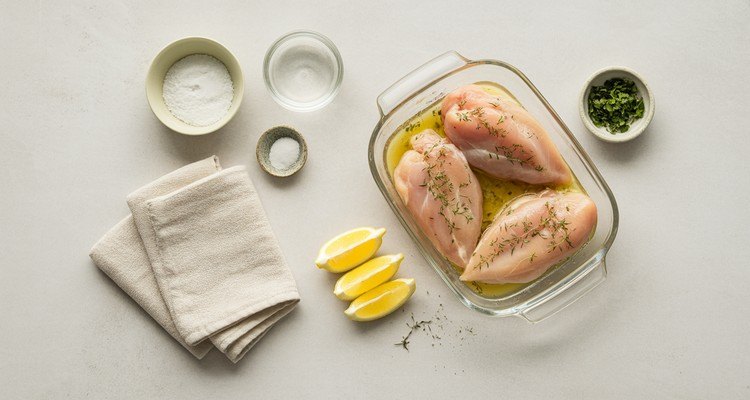
A good grilled chicken breast marinade balances three components: oil, acid, and aromatics. Use a 3:1 ratio of olive oil to acid such as lemon juice or vinegar. Add minced garlic, fresh herbs, salt, and pepper. Marinate in the refrigerator for 30 minutes to 2 hours. Longer than 2 hours with an acidic marinade can make the surface mushy rather than tender.
What Temperature to Grill Chicken Breast
Grill chicken breast over medium-high heat at 375-450°F using a two-zone setup. The direct-heat zone sears the outside for grill marks and flavor, while the indirect zone finishes the interior gently without burning. This temperature range cooks a 3/4-inch breast in 10-14 minutes total.
Setting Up a Gas Grill
Preheat all burners on high with the lid closed for 10-15 minutes. Then reduce one side to medium and leave the other on high. This creates a direct zone (high heat) and an indirect zone (medium heat). Clean the grates with a grill brush after preheating. Oil a folded paper towel with vegetable oil and use tongs to wipe the grates. This prevents the chicken from sticking when you place it on the hot grates.
Setting Up a Charcoal Grill
Light a full chimney of charcoal and pour the coals onto one side of the grill, leaving the other side empty. This banked arrangement creates the same two-zone setup as a gas grill. Position the bottom vents fully open and the top vent three-quarters open. Place the lid with the top vent positioned over the indirect zone to draw heat and smoke across the food.
Helpful gear for this cook:
- TempPro TP20 500FT Wireless Meat Thermometer with Dual Meat — helps verify doneness without guessing
- MEATER Plus: Smart Bluetooth Wireless Meat Thermometer Digital — helps verify doneness without guessing
- TempPro TP19H Waterproof Digital Meat Thermometer with Ambidextrous Backlit — helps verify doneness without guessing
Step-by-Step: How to Grill Chicken Breast
Place prepared chicken breast on the direct-heat zone for 5-7 minutes per side, then move to indirect heat if the interior hasn’t reached 160°F. Pull the chicken at 160°F and rest for 5 minutes. Carryover cooking brings the final temperature to 165°F, the USDA safe minimum for poultry.
Grilling Time and Flipping Strategy
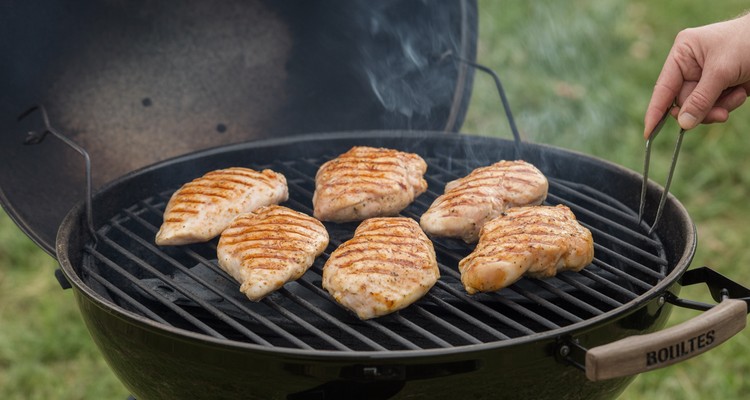
Place the chicken on the direct-heat zone presentation side down. Close the lid and cook for 5-7 minutes without moving it. Lifting the chicken too early tears the surface because the proteins haven’t released from the grates yet. Flip once and cook another 5-7 minutes on the second side. If flare-ups occur, move the chicken to the indirect zone until the flames subside. Total grill time for a 3/4-inch breast is 10-14 minutes. Insert an instant-read meat thermometer into the thickest part of the breast. Pull the chicken at 160°F. Resting for 5 minutes allows carryover cooking to reach the USDA-recommended safe minimum internal temperature of 165°F[USDA].
Grilled Chicken Temperature Chart
| Breast Thickness | Grill Temp | Time Per Side | Pull Temp | Final Temp After Rest |
|---|---|---|---|---|
| 1/2 inch | 400-450°F | 3-4 min | 160°F | 165°F |
| 3/4 inch (pounded) | 375-425°F | 5-7 min | 160°F | 165°F |
| 1 inch | 375-400°F | 7-8 min | 160°F | 165°F |
| 1.5 inches (thick, unpounded) | 375°F | 8-10 min | 160°F | 165°F |
Always verify doneness with a meat thermometer inserted into the thickest part of the breast. Visual cues like clear juices are unreliable indicators of safe internal temperature[FSIS].
How to Grill Chicken Breast Without a Grill
You can achieve grilled-style chicken breast indoors using a cast-iron grill pan on the stove or the broiler in your oven. A preheated grill pan at medium-high heat sears the chicken in 5-7 minutes per side, while broiling at 500°F takes 6-8 minutes per side positioned 4-6 inches from the element.
How to Grill Chicken Breast on Stove
Heat a cast-iron grill pan or heavy skillet over medium-high heat for 3-5 minutes. Add a thin layer of high-smoke-point oil like avocado or vegetable oil. Place the pounded chicken breast in the pan and cook for 5-7 minutes per side. A flat, heavy meat press applied on top creates an even sear across the entire surface. Use a meat thermometer to confirm 160°F before removing from the heat.
How to Grill Chicken Breast in Oven
Set the oven broiler to high and position the rack 4-6 inches below the heating element. Place seasoned chicken breasts on a foil-lined sheet pan or broiler pan. Broil for 6-8 minutes per side, flipping once. The high, direct heat mimics the searing effect of a grill. Check with a thermometer at the thickest point and pull at 160°F. For a slower approach, bake at 425°F for 18-22 minutes. This method is less hands-on but produces less char compared to broiling or grilling.
Serving Suggestions
Let grilled chicken breast rest for 5 minutes before slicing against the grain into 1/2-inch strips. Resting allows juices to redistribute throughout the meat, preventing them from pooling on the cutting board. Sliced grilled chicken works for salads, wraps, grain bowls, and weekly meal prep stored in airtight containers for up to 4 days.
For salads, slice the chicken while still slightly warm and arrange over greens with a vinaigrette. The residual heat wilts the greens just enough to bring out their flavor.
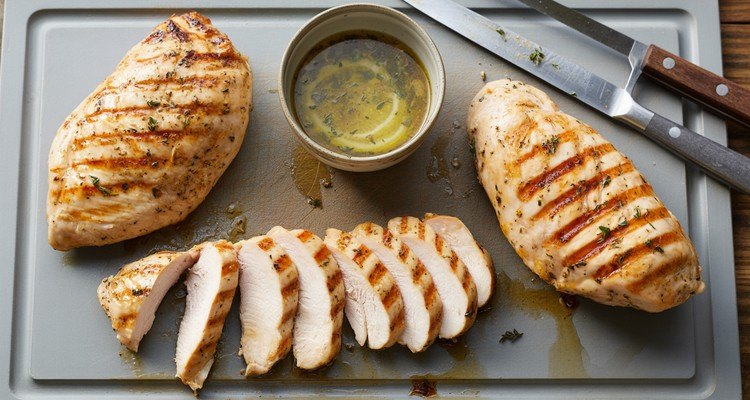
For meal prep, let the chicken cool completely before storing. Divide into individual portions in airtight containers. Refrigerate for up to 4 days or freeze for up to 3 months. Pair grilled chicken breast with bbq sauce, chimichurri, or a simple lemon-herb drizzle. Rubs and seasonings applied before grilling add a flavor base, while sauces at serving add moisture and variety.
Common Grilling Mistakes to Avoid
The most common mistakes when grilling chicken breast are skipping the preheat, moving the meat too early, not using a thermometer, and cutting into the chicken to check doneness. Each of these errors leads to either dried-out chicken, torn skin, or lost juices that result in a tough, flavorless result.
- Not preheating the grill grates: Cold grates cause sticking. Preheat with the lid closed for 10-15 minutes so the grates are hot enough to sear on contact.
- Moving the chicken too soon: Chicken releases naturally from the grates after 4-5 minutes. If it tears when you try to flip, it needs more time.
- Guessing internal temperature: Color and firmness are poor indicators of doneness. An instant-read meat thermometer is the only reliable way to confirm the chicken has reached 160°F before resting.
- Skipping the rest: Cutting into the chicken immediately after grilling releases up to 30% of its juices. Rest for a full 5 minutes on a clean cutting board.
Frequently Asked Questions
How long should you cook chicken breasts on the grill?
A pounded 3/4-inch boneless skinless chicken breast takes 10-14 minutes total over medium-high heat at 375-450°F. Cook 5-7 minutes per side and pull at 160°F internal temperature. Thicker breasts at 1.5 inches need 16-20 minutes total. Always verify with a meat thermometer rather than relying on time alone.
How to cook chicken breast on the grill without drying it out?
Use a dry brine with 3/4 teaspoon kosher salt per pound for 1-2 hours before grilling. Pound the breast to an even 3/4-inch thickness so it cooks uniformly. Grill over medium-high heat using a two-zone setup and pull at 160°F. Rest for 5 minutes to let carryover cooking bring the temperature to 165°F without overcooking.
What temperature should the grill be for chicken breast?
Set the grill to medium-high heat, which is 375-450°F measured at the grate level. This range sears the outside quickly while cooking the interior without burning. A two-zone setup with one side hotter than the other gives you a safety net if the chicken starts browning too fast.
How often should I flip chicken on a gas grill?
Flip the chicken once after 5-7 minutes on the first side. A single flip produces better grill marks and a more consistent sear. If you prefer a more evenly browned crust without heavy char lines, flip every 3-4 minutes for a total of 3-4 flips during the cook.
Do you grill chicken breast on direct or indirect heat?
Start on direct heat to sear and develop grill marks for 5-7 minutes per side. If the chicken is browning too fast or hasn’t reached 160°F, move it to the indirect zone to finish cooking gently. This two-zone method prevents burning while ensuring the interior reaches a safe temperature.
Should you brine or marinate chicken breast before grilling?
Both work, but they serve different purposes. Brining focuses on moisture retention by changing the protein structure to hold water during cooking. Marinades add surface flavor through oil, acid, and aromatics. For maximum juiciness, dry brine first for 1-2 hours, then apply a marinade for 30 minutes before grilling.
Can you grill frozen chicken breast?
Grilling directly from frozen is possible but not recommended. Frozen chicken cooks unevenly because the outside chars before the center thaws. Thaw in the refrigerator for 12-24 hours or use a cold water bath, changing the water every 30 minutes. Fully thawed chicken cooks more evenly and absorbs seasoning better.
How do you know when grilled chicken breast is done?
Insert an instant-read meat thermometer into the thickest part of the breast. The chicken is done when it reads 160°F. After a 5-minute rest, carryover cooking brings the final temperature to the USDA safe minimum of 165°F. Visual cues like clear juices or firmness are unreliable and should not replace a thermometer.
What is the best oil for grilling chicken breast?
Use a high-smoke-point oil like avocado oil (520°F smoke point), vegetable oil (400-450°F), or canola oil (400°F). Olive oil works for marinades but its lower smoke point of 375°F can cause excessive smoking during high-heat grilling. Apply oil to the chicken rather than the grates for better coverage and less flare-up risk.
How long does grilled chicken breast last in the fridge?
Cooked grilled chicken breast lasts 3-4 days in the refrigerator when stored in an airtight container. For longer storage, freeze in portioned bags for up to 3 months. Reheat to 165°F internal temperature before eating. Avoid leaving cooked chicken at room temperature for more than 2 hours to prevent bacterial growth.