There’s something deeply satisfying about biting into a piece of homemade smoked jerky. The rich, smoky flavor, the perfect chewy texture, and knowing exactly what went into it makes store-bought jerky seem bland by comparison. While dehydrators get the job done, a dedicated smoker transforms jerky-making into an art form. A real smoker infuses your meat with genuine wood smoke flavor that simply can’t be replicated any other way. The key to great smoked jerky lies in finding a smoker that excels at low-temperature cooking with consistent heat distribution. You need equipment that can maintain temperatures between 160-200°F for several hours while generating steady smoke. Whether you prefer the convenience of electric, the flavor of pellet, or the authenticity of charcoal, the right smoker makes all the difference. We’ve evaluated vertical smokers, cabinet smokers, and pellet smokers specifically for their jerky-making capabilities, with picks focused on temperature control, cooking space, smoke generation, and overall value.
Quick Roundup List
- Best Overall Electric: Masterbuilt 30-inch Digital Electric Smoker
- Best Budget: Masterbuilt 30-inch Analog Electric Smoker
- Best for Serious Makers: Bradley Smoker BS611 4-Rack Natural Draft
- Best Pellet: Camp Chef Woodwind Pro 36 Pellet Grill
- Best Charcoal: Weber 18-inch Smokey Mountain Cooker
- Best Large Capacity: Pit Boss 5-Series Vertical Smoker
- Best Value Pellet: Pit Boss PBV3P1 Vertical Pellet Smoker
Smoker Comparison Table
| Product | Award | Fuel Type | Cooking Area | Best For |
|---|---|---|---|---|
| Masterbuilt 30″ Digital Electric | Best Overall Electric | Electric | 710 sq in | Most jerky makers |
| Masterbuilt 30″ Analog Electric | Best Budget | Electric | 535 sq in | Beginners |
| Bradley Smoker BS611 4-Rack | Best for Serious Makers | Electric | 4 racks | Set-and-forget |
| Camp Chef Woodwind Pro 36 | Best Pellet | Pellet | 36-inch pellet grill | Pellet enthusiasts |
| Weber Smokey Mountain 18″ | Best Charcoal | Charcoal | 2 x 18.5″ grates | Traditionalists |
| Pit Boss 5-Series Vertical | Best Large Capacity | Pellet | 5-Series vertical | Batch production |
| Pit Boss PBV3P1 | Best Value Pellet | Pellet | 901 sq in | Budget pellet |
What to Look for in a Jerky Smoker
Not every smoker excels at making jerky. The low-temperature, long-duration cooking that jerky requires demands specific features that set great jerky smokers apart from general-purpose units. Use this quick reference to identify the features that matter most:
| Feature | Minimum Target | Why It Matters |
|---|---|---|
| Temperature Range | 150-200°F minimum setting | Jerky needs low heat; many smokers can’t dial down far enough |
| Cooking Space | 500+ sq in | Strips need airflow around each piece to dry evenly |
| Rack Configuration | 3+ adjustable racks | Vertical space matters more than footprint for jerky |
| Smoke Generation | 4-8 hour consistent output | Auto wood chip feeders or pellet hoppers reduce monitoring |
| Ventilation | Adjustable vents or damper | Moisture must escape for proper drying |
| Temperature Control | PID or digital preferred | Consistent heat prevents uneven drying and spoilage |
Detailed Product Reviews
Masterbuilt 30-inch Digital Electric Smoker — Best Overall Electric
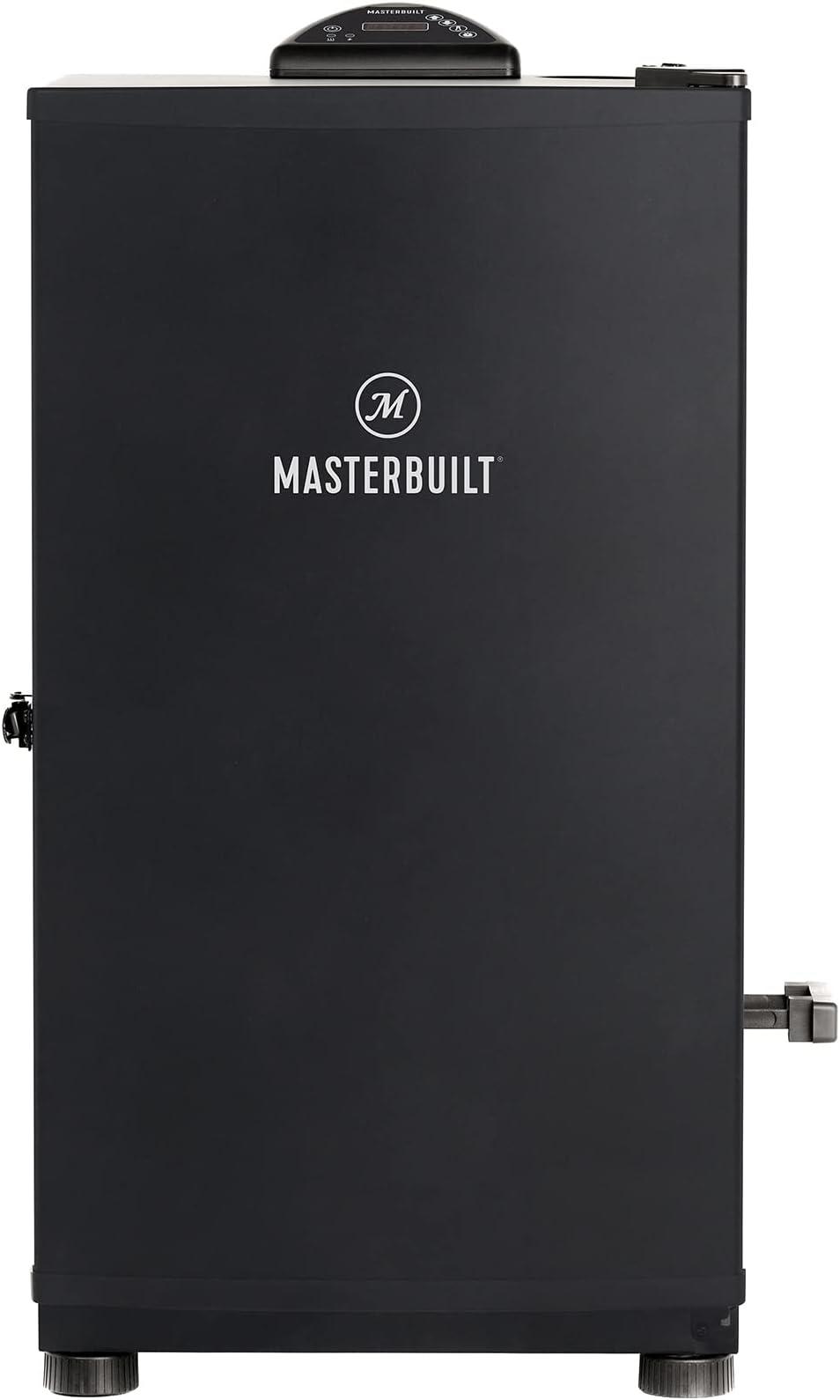 The Masterbuilt 30-inch Digital Electric Smoker stands out as the most versatile option for home jerky makers. Its digital control panel allows precise temperature settings up to 275°F, with excellent stability at the lower temperatures jerky requires. The patented side wood chip loader lets you add smoke flavor without opening the door, maintaining consistent internal temperature throughout your cooking session. With 710 square inches of cooking space spread across four chrome-coated racks, this smoker handles substantial jerky batches comfortably. The spacious vertical design provides excellent airflow around your meat strips. A removable water bowl adds moisture control, though many jerky makers run without water to encourage proper drying.
Highlights
- Digital temperature and time controls up to 275°F
- Patented side wood chip loader for continuous smoke
- Four chrome-coated smoking racks with 710 sq in total
- Removable water bowl and rear grease tray
- Plug-and-play electric operation
Specifications
- Cooking Area: 710 sq in across 4 racks
- Temperature Range: Up to 275°F
- Fuel Type: Electric with wood chip tray
- Controls: Digital with timer
- Dimensions: Approx. 19″ W x 20″ D x 33″ H
Customer Reviews
- “I’ve only used it twice, making jerky, does a great job. Set the timer and temp, let it smoke.”
- “This is my second Masterbuilt smoker. I wore the first one out after 6 years of making mouthwatering smoked meats.”
- “Perfect for beginners as myself. Already made a rack of ribs and smoked a Turkey. Both came out great.”
Masterbuilt 30-inch Analog Electric Smoker — Best Budget
 For those entering the world of smoked jerky without a large investment, the Masterbuilt Analog Electric Smoker delivers solid performance at an accessible entry point. The simple analog temperature dial eliminates the complexity of digital controls while still providing adequate temperature regulation for jerky making. Three chrome-coated racks offer 535 square inches of cooking space, enough for moderate jerky batches. The straightforward design means fewer components that can malfunction, making this smoker a reliable workhorse. A removable wood chip tray sits at the bottom for easy loading, though you’ll need to open the door to add more chips during longer smoking sessions.
Highlights
- Simple analog temperature dial up to 275°F
- Three chrome-coated smoking racks with 535 sq in total
- Removable wood chip tray for easy loading
- Water bowl for moisture control
- Compact footprint for smaller spaces
Specifications
- Cooking Area: 535 sq in across 3 racks
- Temperature Range: Up to 275°F
- Fuel Type: Electric with wood chip tray
- Controls: Analog temperature dial
- Capacity: 3 chickens, 2 turkeys, or 3 racks of ribs
Customer Reviews
- “Easy to assemble and use, making it a great choice for beginners.”
- “Love this thing. Even having the neighbor over using it.”
- “Definitely looking to get a full sized smoker, but for what’s it worth this thing is legit.”
Original Bradley Smoker BS611 4-Rack Natural Draft Vertical Electric Smoker — Best for Serious Jerky Makers
 The Original Bradley Smoker BS611 4-Rack has earned strong praise from backyard cooks for its reliable temperature control and purpose-built design for low-and-slow jerky smoking. The separate smoke generator sets it apart from most electric smokers on the market. What makes Bradley unique is the automatic bisquette feeder system that burns proprietary wood bisquettes for up to 9 hours of continuous smoke. This eliminates the need to manually add wood chips during long sessions, making it truly set-and-forget. The stainless steel interior resists rust and cleans easily, while the dual controls let you manage heat and smoke independently.
Highlights
- Automatic bisquette feeder runs up to 9 hours without attention
- Four included racks for substantial batch capacity
- Stainless steel interior resists rust and cleans easily
- Smoke diffuser system prevents acrid flavors and “black rain”
- Separate heat and smoke controls for precise adjustments
Specifications
- Dimensions: 19″ D x 22″ W x 35″ H (24″ W with generator)
- Cooking Area: 4 racks at 11″ x 13″ each
- Fuel Type: Electric with wood bisquettes
- Smoke Duration: Up to 9 hours automatic
- Construction: Stainless steel interior
Customer Reviews
- “The best smoker I have ever used. Simple to operate and easy to clean.”
- “I am very pleased with the quality of the smoked meats coming out of this smoker.”
- “My Hubby Loves It! Bought this as a bday gift for my husband and he absolutely loves it.”
Camp Chef Woodwind Pro 36 Pellet Grill – Best Pellet Smoker
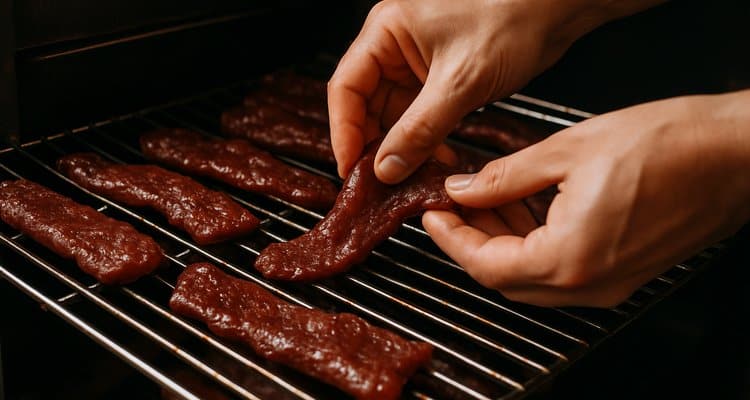
 The Camp Chef Woodwind Pro 36 Pellet Grill replaces the unavailable Camp Chef vertical-smoker slot with a current Camp Chef pellet smoker that is better suited to long, steady smoke sessions than a basic grill. It is not a vertical cabinet smoker, so the section now focuses on its pellet-smoker strengths: Wi-Fi control, a large cook chamber, and the Smoke Box that lets you add wood chunks or charcoal for stronger smoke flavor. For jerky makers, the main appeal is controlled low-and-slow heat with more smoke flexibility than many pellet grills offer. The Woodwind Pro platform also gives you enough space for racks and trays when you are drying larger batches, while the app-connected controller helps monitor longer sessions without constant babysitting.
Highlights
- Camp Chef pellet grill with Wi-Fi control for long smoking sessions
- Smoke Box lets you add wood chunks or charcoal for stronger smoke flavor
- Large 36-inch cooking platform for bigger batches
- Useful for jerky, ribs, poultry, and general pellet-grill cooking
- Full Camp Chef pellet grill and smoker
Specifications
- Fuel Type: Wood pellets, with Smoke Box for added wood or charcoal
- Cooking Platform: 36-inch Woodwind Pro pellet grill
- Controller: Wi-Fi connected digital controller
- Best Use: Pellet-smoking convenience with added smoke control
- Product Type: Full pellet grill and smoker
Customer Reviews
- “We are completely satisfied with this grill. The smoke box is such a cool feature for being able to add more smoke flavor.”
- “It you want a actual smoker pellet grill this is for you. It actual puts out smoke the whole time and the smoke even has a setting in the control. Its worth every penny”
- “This camp chef pellet grill and smoker is the best grill I have ever owned. It is built with quality craftsmanship, and I love the all stainless steel construction on the inside. It is easy to clean.”
Weber 18-inch Smokey Mountain Cooker — Best Charcoal
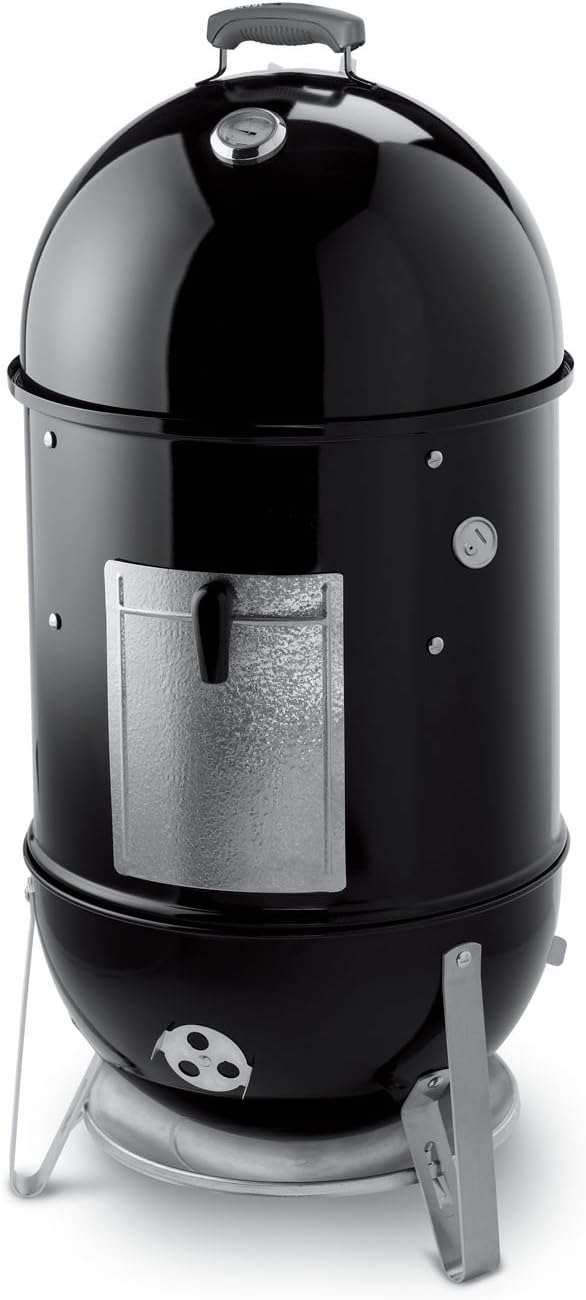 For traditionalists who believe the best smoke comes from burning charcoal and wood, the Weber Smokey Mountain Cooker delivers authentic flavor that electric and pellet smokers simply cannot match. This bullet-style smoker requires more hands-on attention than electric options, but rewards that effort with deeper, more complex smoke profiles. The porcelain-enameled steel construction retains heat efficiently, while adjustable dampers on both the lid and bowl give you precise airflow control. Two 18.5-inch nickel-plated cooking grates provide ample space for jerky, and the water pan helps moderate temperature swings. A built-in thermometer lets you monitor internal temperature without opening the lid, and a silicone grommet accommodates digital probe thermometers.
Highlights
- Porcelain-enameled steel construction for durability
- Two 18.5-inch nickel-plated cooking grates
- Adjustable dampers on lid and bowl for temperature control
- Built-in lid thermometer
- Water pan for moisture and temperature regulation
- Silicone grommet for probe thermometers
Specifications
- Cooking Area: 481 sq in (2 x 18.5″ grates)
- Fuel Type: Charcoal with wood chunks
- Construction: Porcelain-enameled steel
- Thermometer: Built-in lid thermometer
- Rating: 4.7 out of 5 stars from over 1,600 reviews
Customer Reviews
- “I love this smoker. Holds low temps, steady for hours. Truly the best charcoal smoker available.”
- “There is nothing like a WSM. So many Mods. Great outcome. Temp is easy to control. A must have.”
- “If you are looking for a quality built smoker that produces delicious food, the WSM is the smoker for you.”
Pit Boss 5-Series Wood Pellet Vertical Smoker – Best Large Capacity
 The Pit Boss 5-Series Wood Pellet Vertical Smoker restores this slot to a true vertical pellet smoker instead of the incorrect Navigator 850 pellet grill listing. It keeps the high-capacity focus of the original recommendation while matching the article’s jerky-smoker use case more closely. This is the better fit for cooks who want stacked rack space and pellet convenience for larger jerky batches. The vertical cabinet design makes it easier to load trays or racks without spreading meat across a horizontal grill surface.
Highlights
- True vertical wood pellet smoker for rack-based jerky loading
- 5-Series capacity suited to larger batches
- Pellet fuel system for steady smoke and long cooking sessions
- Better section match than the incorrect Navigator pellet grill ASIN
- Useful for jerky, sausage, poultry, ribs, and low-and-slow smoking
Specifications
- Fuel Type: Wood pellets
- Design: Vertical pellet smoker cabinet
- Series: Pit Boss 5-Series
- Best Use: Large-batch jerky and rack-based smoking
- Product Type: Full vertical pellet smoker
Customer Reviews
- “The most horrible smoker, I have been using a gas smoker for 40 years, all I have is issues, the auger, keeping it going, always an ERR , cannot get the wifi/ Bluetooth to connect, I sent this to my restaurant in Cayman.”
Pit Boss PBV3P1 Vertical Pellet Smoker — Best Value Pellet
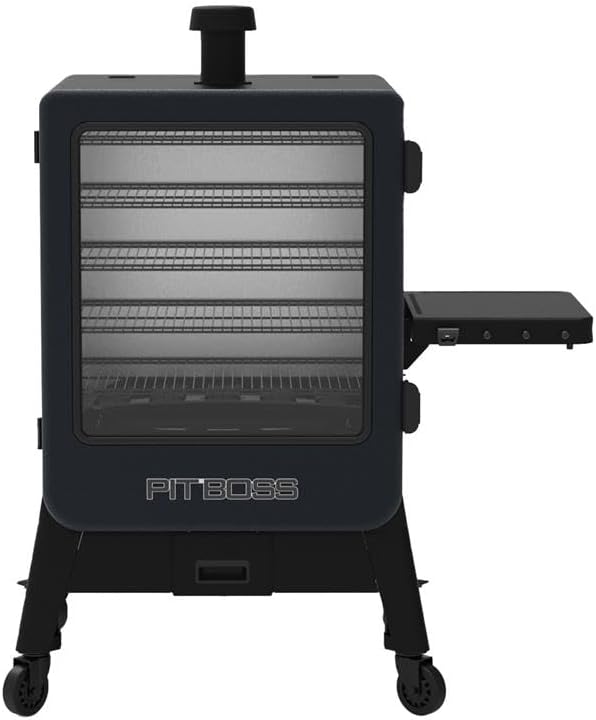 The Pit Boss PBV3P1 Vertical Pellet Smoker delivers pellet smoker convenience at a budget-friendly price point. Part of the Copperhead 3-Series lineup, it offers adjustable cooking racks and solid temperature control for regular home jerky production. The dial-in digital control board reaches temperatures from 150-420°F, giving you the low-end precision jerky demands. The large pellet hopper supports extended smoke times with automatic start-up and cool down sequences. A chimney exhaust and convection cooking airflow circulate smoke evenly throughout the chamber. The pellet view window makes it easy to monitor fuel levels without interrupting the cook.
Highlights
- Adjustable cooking racks for flexible jerky loading
- Temperature range from 150-420°F with dial-in digital controls
- Large pellet hopper for up to 18 hours of smoke time
- Advanced burn technology with convection airflow
- Heavy-gauge stainless steel and CRS high-heat coating
Specifications
- Cooking Area: 901 sq in with 4 adjustable racks (14.75″ x 12.25″ each)
- Temperature Range: 150-420°F
- Fuel Type: Wood pellets
- Hopper Capacity: 40 lbs (up to 18 hours of smoke time)
- Features: Auto start-up, cool down, pellet view window
Customer Reviews
- “I would like to say this smoker is amazing.”
- “Good is everything you eat coming out of this thing.”
- “Great smoker! I recommend this one to anyone from novice to pro.”
Tips for Smoking Perfect Jerky
Meat Selection and Preparation
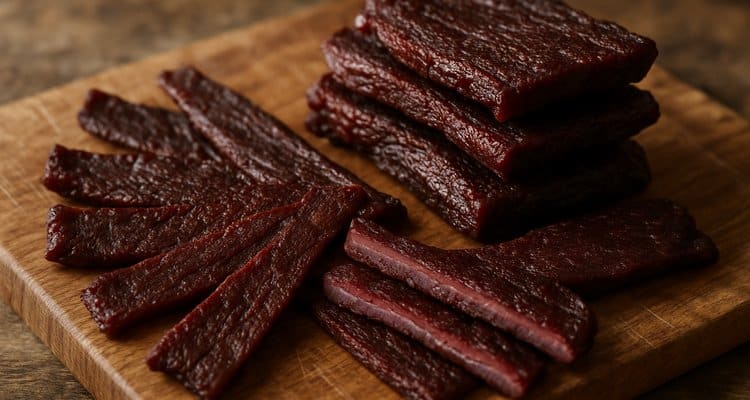
Lean cuts work best for jerky because fat doesn’t dehydrate and can cause spoilage. Top round, bottom round, eye of round, and flank steak are the most popular choices for beef jerky. Trim all visible fat before slicing. For the most consistent results, partially freeze the meat for 1-2 hours before slicing, which makes it easier to cut uniform strips. Slice against the grain for tender jerky that’s easy to chew, or with the grain for a tougher, more traditional texture. Aim for strips between 1/8 and 1/4 inch thick. Thinner strips dry faster and have a crispier texture, while thicker cuts stay chewier.
Marinating for Maximum Flavor
Marinate your sliced meat for at least 4 hours, ideally overnight in the refrigerator. A good jerky marinade balances salt (for preservation and flavor), acid (for tenderizing), and sweetness (for caramelization during smoking). Soy sauce, Worcestershire sauce, and liquid smoke form the base of most classic jerky marinades. Common flavor additions include garlic powder, onion powder, black pepper, brown sugar, and red pepper flakes. Pat your strips dry with paper towels before loading the smoker racks. Excess surface moisture extends drying time and can lead to uneven results.
The Smoking Process
Arrange strips on the smoker racks with space between each piece for airflow. Overlapping strips will create wet spots and uneven drying. Start your smoker at 160°F and let it run for the first 1-2 hours at this lower temperature to maximize smoke absorption. After the initial smoke phase, raise the temperature to 180-200°F to finish drying. Leave the smoker vent partially open to allow moisture to escape. Check your jerky every hour after the 3-hour mark. The jerky is done when it bends and shows white fibers at the bend point but doesn’t snap cleanly in half.
Storage and Shelf Life
Let finished jerky cool completely before storing. Use this table to plan storage based on how long you need your jerky to last:
| Storage Method | Shelf Life | Best For |
|---|---|---|
| Airtight Container (Room Temp) | 1-2 weeks | Snacking, short-term |
| Refrigerated | 3-6 months | Medium-term storage |
| Frozen | Up to 12 months | Long-term storage |
| Vacuum Sealed | 2-3x longer at any temp | Maximum shelf life |
Frequently Asked Questions
What temperature should I smoke jerky at?
How long does it take to smoke jerky?
Can I make jerky in a pellet smoker?
Do I need a water pan when smoking jerky?
What wood is best for smoking jerky?
Electric vs pellet smoker for jerky: which is better?
Final Verdict
Choosing the right smoker for jerky comes down to three factors: temperature control, cooking capacity, and how hands-on you want to be during the process. For most home jerky makers, the Masterbuilt 30-inch Digital Electric Smoker hits the sweet spot of precise temperature control, generous rack space, and true set-and-forget convenience. If you’re on a tighter budget, the Masterbuilt Analog delivers the same core performance at a lower price point. Pellet smoker fans should look at the Camp Chef Woodwind Pro 36 Pellet Grill for its dedicated jerky racks and authentic wood smoke flavor, while traditionalists who want maximum smoke complexity will appreciate the Weber Smokey Mountain. For high-volume production, the Pit Boss 5-Series Vertical Smoker offers the most rack space, and the Pit Boss PBV3P1 gives you pellet convenience at a budget-friendly price. Whichever smoker you choose, the key to great jerky remains the same: consistent low heat, steady smoke, and patience. Any of our picks will get you there.