Competition-quality spare ribs start on the cutting board, not in the smoker. Trimming a full spare rib rack into a clean St. Louis style cut takes about 10 minutes and dramatically improves how evenly your pork ribs cook. The USDA recommends cooking all fresh pork to a minimum internal temperature of 145°F with a 3-minute rest.[USDA] For spare ribs smoked low and slow, pitmasters target 195-203°F internal for tender, pull-apart meat. This guide covers exactly how to trim spare ribs step by step, what to do with the trimmings, and how to slice ribs cleanly after cooking.
Quick Summary
- Why Trim? Trimming spare ribs into a St. Louis style cut ensures even cooking, removes tough cartilage and unrenderable fat, and improves smoke penetration. This results in a consistently tender, flavorful rack without dry ends or chewy bits.
- Key Steps: The process involves removing the silver skin membrane, slicing off the skirt meat, cutting away the breast bone cartilage, and squaring up the rack. These steps create a uniform, rectangular slab ideal for smoking.
- Tools & Time: You’ll need a large cutting board, a sharp 5-7 inch boning knife, and paper towels for grip. The entire trimming process typically takes a beginner 8-12 minutes per rack, becoming faster with practice.
- Trimmings Use: Don’t discard trimmings. The breast bone section can be chopped into BBQ rib tips, while skirt meat can be smoked as a pitmaster snack or ground for sausage. Excess fat can be rendered into lard.
Should You Trim Spare Ribs or Not?
You should always trim spare ribs before smoking or grilling. Trimming creates a uniform rectangular shape that cooks evenly, removes chewy cartilage and hard fat that won’t render, and allows smoke and dry rub to penetrate the meat more effectively. Untrimmed racks produce inconsistent results with burnt thin ends and tough bites.
Trimming meat for even cooking solves the biggest problem with this cut: uneven thickness. A full untrimmed rib rack has thin, tapered ends that dry out and burn long before the thick center finishes cooking. The breast bone section contains hard cartilage that never softens, even after hours of smoking. Removing it gives diners nothing but tender, meaty bites from end to end. Trimming also improves presentation. A squared-up St. Louis style rack looks clean on the plate and fits neatly on standard smoker grates without hanging over edges.
Anatomy of a Pork Rib Rack
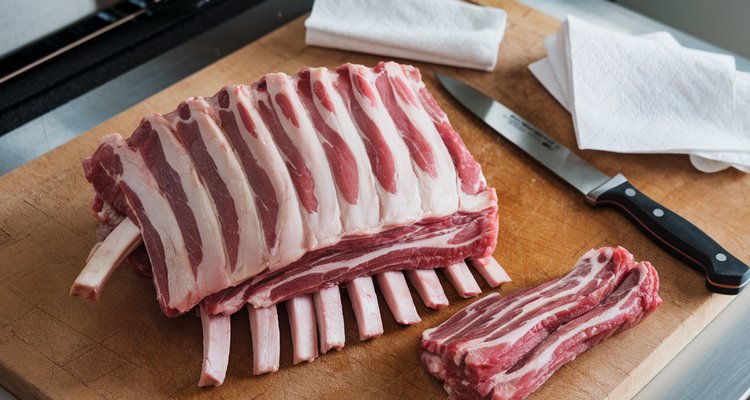
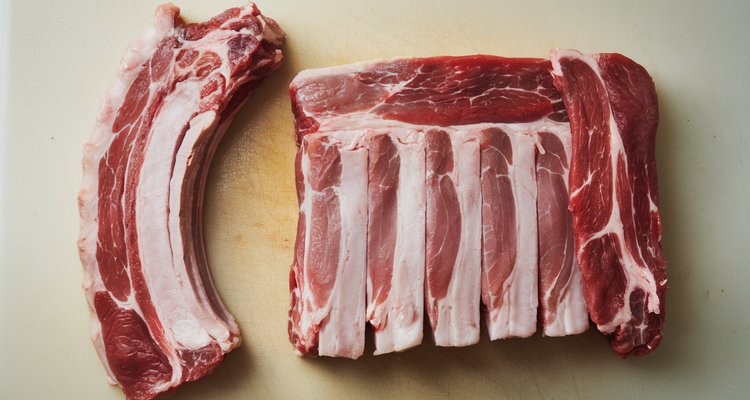
A full spare rib rack has four distinct parts: the main rib bones running across the center, the breast bone and cartilage strip along the top edge, the skirt or flap meat on the bone side, and the thin membrane covering the back. Understanding each part tells you exactly where to trim spare ribs for a clean St. Louis cut.
| Rib Section | Where It Is | Trim Decision | Best Use |
|---|---|---|---|
| Main rib bones | Center of the rack | Keep as the St. Louis slab | Low-and-slow smoking |
| Breast bone cartilage | Top edge of the rack | Remove in a straight cut | Rib tips |
| Skirt meat | Loose flap on bone side | Remove before cooking | Pitmaster snack or sausage |
| Membrane | Bone side | Peel off first | Discard |
The Main Rib Bones
The main rib bones form the core of the rack. These curved bones hold the majority of the meat and define the final shape of your trimmed slab.
The Breast Bone and Cartilage
The breast bone sits along the top edge. This section contains a mix of cartilage, small bones, and pockets of fat that cook unevenly.
The Skirt Meat (Flap)
The skirt meat is a loose flap attached to the bone side. It cooks faster than the rest of the rack, so removing it prevents burning.
The Silver Skin Membrane
The silver skin membrane covers the concave bone side. This papery layer blocks smoke and rub from reaching the meat and must be removed first.
Helpful gear for this cook:
- extra-long stainless steel rib rack — keeps slabs upright and improves smoker capacity
- Bryco Goods pink butcher paper — works for wrapping brisket, ribs, and pork during the stall
- ThermoMaven instant-read meat thermometer — checks doneness quickly at the grill
Helpful gear for this cook:
- TempPro TP20 500FT Wireless Meat Thermometer with Dual Meat — helps verify doneness without guessing
- MEATER Plus: Smart Bluetooth Wireless Meat Thermometer Digital — helps verify doneness without guessing
- ThermoMaven wireless meat thermometer — helps verify doneness without guessing
Essential Tools for Trimming Ribs
To trim spare ribs, you need a large, stable cutting board for a safe workspace, a sharp 5-to-7-inch boning knife for precise cuts, and paper towels to get a firm grip on the slippery membrane for easy removal. These basic items ensure a clean and efficient process.
You only need a few basic tools to get a clean, professional trim on your spare ribs. Having the right equipment makes the job faster, safer, and more precise.
- Large Cutting Board: A large, stable cutting board gives you plenty of room to work and contains any mess. A plastic board is easy to sanitize.
- Sharp Boning Knife: A 5-to-7-inch flexible boning knife is ideal for navigating around bones and cartilage.
- Paper Towels: A dry paper towel is essential for gripping the slippery membrane to peel it off cleanly.
Food Safety for Handling Raw Pork
For safe pork handling, wash hands thoroughly before and after contact and use a separate cutting board to prevent cross-contamination. Keep raw pork refrigerated at or below 40°F until ready to cook. Sanitize all tools, boards, and work surfaces with hot, soapy water when finished.
Proper food safety is crucial when working with raw meat. Always wash your hands with soap and warm water for at least 20 seconds before and after touching pork. Use a dedicated, non-porous cutting board for raw meat to avoid contaminating other foods. The USDA advises keeping raw pork refrigerated at 40°F or below to inhibit bacterial growth.[USDA]
How to Trim Spare Ribs into St. Louis Style (Step-by-Step)
Trimming spare ribs into St. Louis style involves four steps: peel off the back membrane, slice away the skirt meat, cut off the breast bone cartilage in a straight line, and square up the tapered end. You need a sharp boning knife, paper towels for grip, and a large cutting board.
The entire process takes 8-12 minutes per rack.
Step 1: Remove the Membrane (Silver Skin)
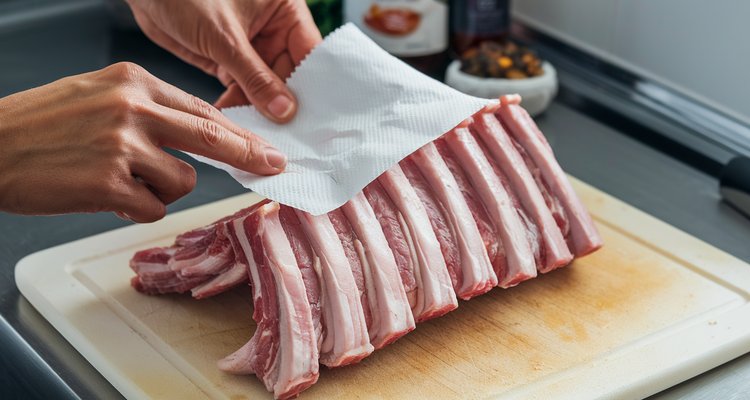
Flip the rack bone-side up. Slide a butter knife or the tip of a boning knife under the membrane near the middle of the rack to lift a small flap. Grab the lifted edge with a dry paper towel for grip. Pull the membrane off in one smooth motion toward the end of the rack. It should peel away in a single sheet. If the silver skin tears, start a new edge and pull again. Some racks have thicker membranes that come off in two or three pieces.
Step 2: Remove the Skirt Meat
With the rack still bone-side up, locate the loose flap of skirt meat running diagonally across the bones. Grip one end and slice it away with your boning knife. Set the skirt meat aside. It makes an excellent pitmaster snack when seasoned and smoked alongside the main rack.
Step 3: Remove the Breast Bone
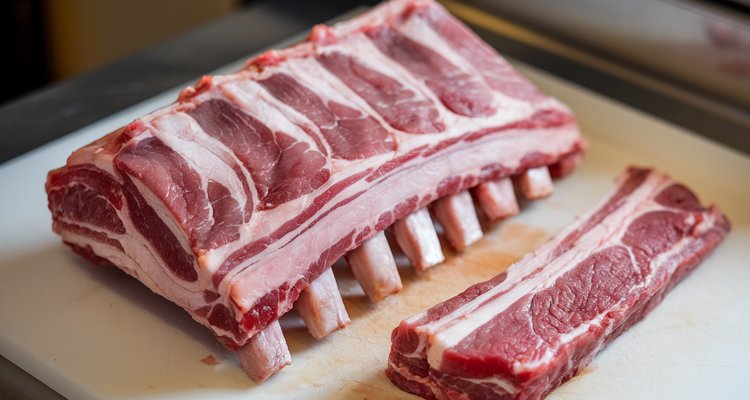
Flip the rack meat-side up. Find the line where the curved rib bones end and the breast bone cartilage begins. You can feel this transition by pressing along the top edge. Using your boning knife, cut a straight line across the full width of the rack, following the natural joint. Remove the entire breast bone section in one piece.
Step 4: Square Up the Rack and Trim Excess Fat
Cut off the small, thin bone at the tapered end of the rack. This narrow piece burns easily and has very little meat. Trim any thick, hard fat caps from the meat side. Leave a thin layer of fat for flavor and moisture, but remove any solid white chunks that won’t render during cooking. Your finished rack should be a clean rectangle with even thickness. This is the classic St. Louis style cut preferred for competition and backyard smoking.
| Step | Action | Tool | Time |
|---|---|---|---|
| 1 | Remove membrane (silver skin) | Butter knife + paper towel | 2-3 min |
| 2 | Remove skirt meat | Boning knife | 1-2 min |
| 3 | Remove breast bone cartilage | Boning knife | 2-3 min |
| 4 | Square up rack and trim excess fat | Boning knife | 3-4 min |
What to Do With Spare Rib Trimmings
Never throw away spare rib trimmings. The breast bone section makes classic BBQ rib tips when chopped into 2-inch chunks and smoked at 250°F for 2-3 hours. The skirt meat works as a seasoned pitmaster snack or can be ground for homemade pork sausage.
Fat trimmings render into cooking lard or add moisture to lean ground pork for burgers.
Make Classic BBQ Rib Tips
Chop the breast bone section into 2-inch pieces. Season with your favorite rub and smoke at 250°F for 2-3 hours until tender. These are a BBQ staple in Chicago and Memphis.
Grind for Sausage or Burgers
Grind the skirt meat and excess fat together for homemade pork sausage patties or blended pork burgers.
Create a Pitmaster Snack
Season the skirt meat with salt, pepper, and garlic powder. Toss it on the smoker alongside the main rack for a quick snack in about 45 minutes.
Render Your Own Lard
Chop hard fat trimmings into small cubes and render them slowly in a cast-iron skillet over low heat (around 200-225°F) for 30-40 minutes.
Alternative Cuts: Chinese Style and Small Pieces
Cutting spare ribs Chinese style means slicing across the bones into 1-to-2-inch strips rather than between them. This technique requires a heavy meat cleaver or butcher’s bone saw. The resulting small rib pieces are ideal for wok-frying, braising, and sticky glazed rib recipes that cook in 30-45 minutes instead of hours on the smoker.
Creating Chinese-Style Ribs
To cut spare ribs into small pieces, place the trimmed rack on a sturdy cutting board. Position a heavy cleaver perpendicular to the bones and strike firmly to cut through each bone.
Getting Butcher Assistance
Many butchers will cut ribs Chinese style for free if you ask when purchasing. This saves effort and produces cleaner cuts than most home cooks achieve with a cleaver. Small-cut spare ribs work well in braised dishes, pressure cooker recipes, and stir-fry preparations. They absorb flavorful meat marinades and sauces quickly due to their increased surface area.
How to Cut Ribs After Cooking
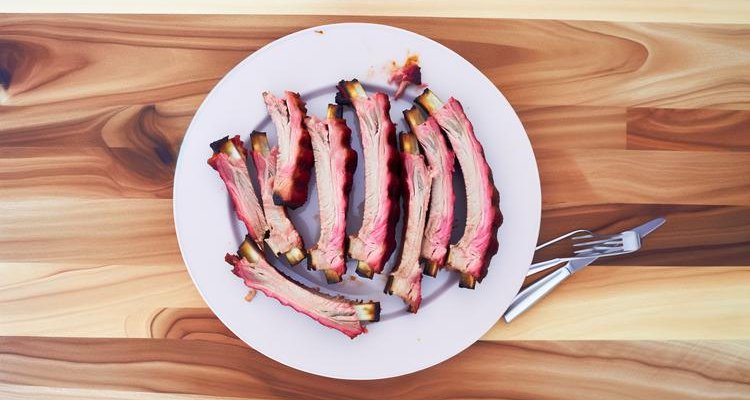
Cut cooked spare ribs by flipping the rack meat-side down on a cutting board so the bones are clearly visible. Use a long, sharp slicing knife to cut between each bone in one smooth stroke. Always rest ribs for 10-15 minutes after removing them from the smoker to let juices redistribute throughout the meat.
Resting the Ribs is Critical
Resting is critical. Cutting too early releases juices that would otherwise stay in the meat, leaving you with dry ribs and a messy board.
Slicing Technique for Clean Cuts
Flip the rack bone-side up so the bones are clearly visible. Slice between each bone using a long, sharp knife. Avoid serrated knives, which tear the bark and shred the meat surface. For presentation, cut the rack in half first, then separate individual ribs. This gives you more control and cleaner cuts than working through the full slab at once.
Storing Trimmed and Untrimmed Ribs
Store trimmed spare ribs in the refrigerator for up to two days by wrapping them tightly in plastic wrap. For long-term storage, wrap them in plastic and foil, place in a freezer bag, and freeze for up to six months at 0°F.
Refrigerating Trimmed Ribs
You can trim spare ribs up to two days before you plan to cook them. After trimming, apply your dry rub and wrap the rack tightly in plastic wrap or place it in a vacuum-sealed bag. Store it in the coldest part of your refrigerator, ideally below 40°F.
Freezing Trimmed Ribs
For longer storage, trimmed ribs freeze exceptionally well. Wrap them tightly in plastic wrap, followed by a layer of aluminum foil or butcher paper, and place them in a freezer bag. They will keep for up to 6 months in a freezer set to 0°F.
Frequently Asked Questions
Where should you trim spare ribs?
Trim along three lines: the joint where rib bones meet the breast bone cartilage at the top, the tapered thin bone at the narrow end, and the skirt meat flap on the bone side. These three cuts transform a full spare rib rack into a rectangular St. Louis style slab.
How long does it take to trim spare ribs?
Trimming a full spare rib rack into St. Louis style takes 8-12 minutes for a beginner and about 5 minutes once you have done it a few times. The membrane removal step takes the longest. Having a sharp boning knife and dry paper towels ready speeds up the process significantly.
What should you do with spare rib trimmings?
Save the breast bone section for rib tips, smoke the skirt meat as a cook’s snack, and render clean fat pieces for cooking fat. Keep the trimmings chilled until they go on the smoker or into the freezer.
Which side of spare ribs has the membrane?
The membrane is on the bone side of the rack. Flip the ribs so the bones face up, loosen one corner with a butter knife, grip it with a paper towel, and peel it away before trimming the rack square.
What are common mistakes when cooking ribs?
The three most frequent mistakes are skipping membrane removal, boiling ribs before smoking, and relying on time instead of temperature. Boiling washes away flavor and creates a mushy texture. Always use an instant-read thermometer to check doneness rather than guessing based on cook time alone.
Should you trim ribs before or after cooking?
Always trim spare ribs before cooking. Removing the breast bone, membrane, and excess fat before smoking ensures even heat distribution and consistent tenderness. Trimming after cooking is nearly impossible because the softened meat tears instead of cutting cleanly.
Can you trim baby back ribs the same way?
Baby back ribs need less trimming than spare ribs. They have no breast bone section to remove. You still need to peel off the membrane and trim any loose fat. The rack shape is already naturally uniform, so the squaring-up step is usually unnecessary with baby backs.
What temperature should spare ribs reach when done?
The USDA minimum safe temperature for pork is 145°F with a 3-minute rest. However, spare ribs smoked low and slow reach their ideal tenderness at 195-203°F, when the collagen has fully broken down into gelatin. Insert a probe between the bones into the thickest meat to check.
Do you need a special knife to trim spare ribs?
A sharp 5-to-7-inch boning knife is the ideal tool for trimming spare ribs. Its narrow, flexible blade follows the contour of bones and cartilage precisely. A sharp chef’s knife also works but is less maneuverable around joints. Avoid dull knives, which slip on fat and increase the risk of injury.
Can you freeze spare rib trimmings?
Yes, spare rib trimmings freeze well for up to 3-4 months in a freezer kept at 0°F. For best results, separate the skirt meat, rib tips, and fat into individual airtight freezer bags labeled with the date. Thaw them overnight in the refrigerator before cooking.
Take Home Message
Trimming spare ribs is a simple yet impactful step that elevates your BBQ from good to great. By creating a uniform St. Louis cut, you ensure every bite is tender, juicy, and perfectly cooked. Don’t skip this crucial prep step for competition-worthy results.